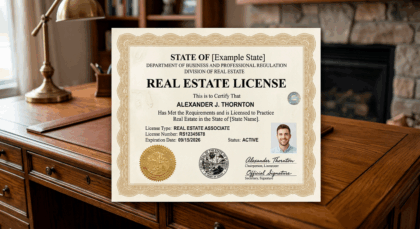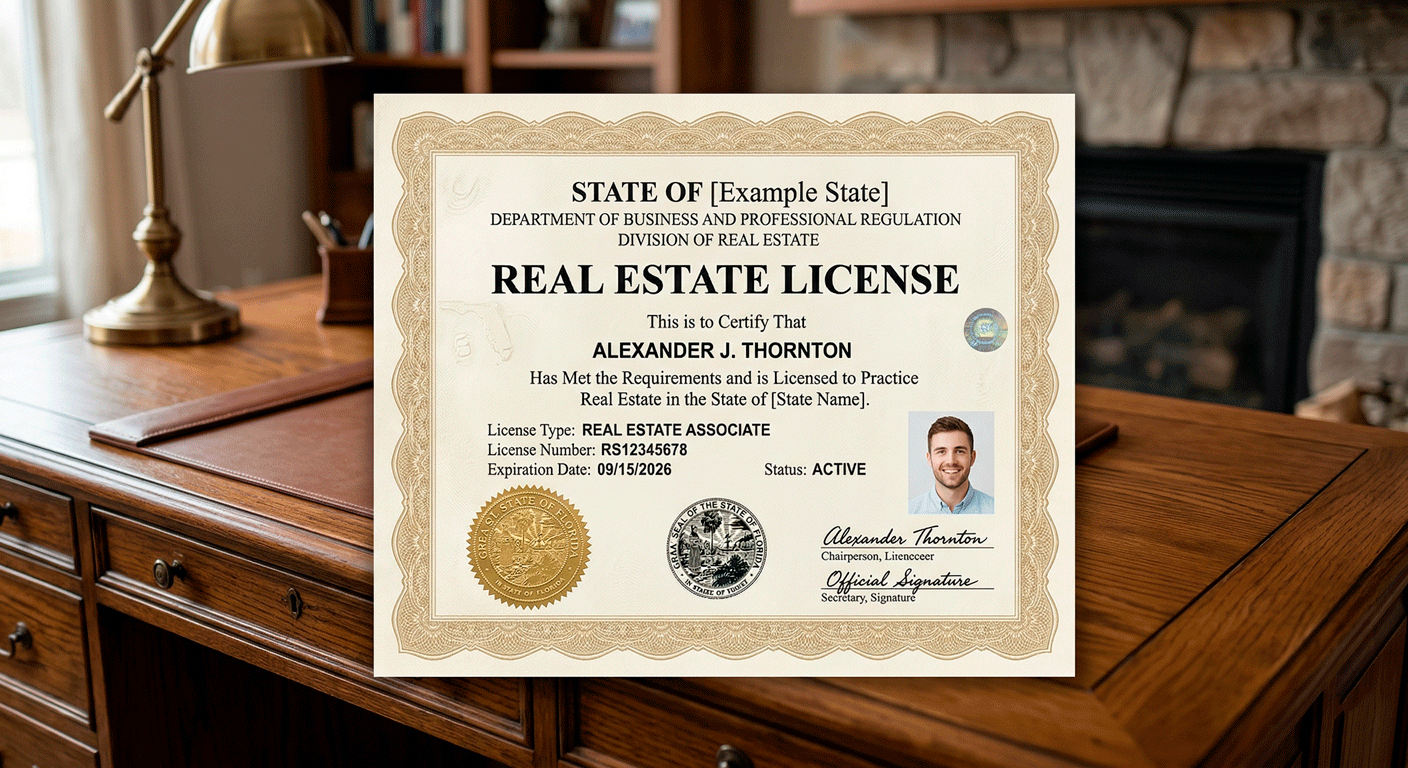
A real estate license is an official state-issued credential that legally permits an individual to work as a real estate agent or broker. It authorizes the holder to assist clients in buying, selling, renting, or leasing property in exchange for compensation, and serves as the entry requirement into the real estate profession.
Key Features:
- Legal authorization to operate: Required by law to engage in real estate transactions, ensuring compliance with state education, ethics, and licensing standards.
- Client representation rights: Allows licensed professionals to act on behalf of buyers, sellers, or tenants during property transactions.
- Commission-based income eligibility: Grants the legal right to earn commissions from completed real estate deals.
- Access to MLS systems: Provides eligibility to use the Multiple Listing Service (MLS), the primary database for available properties on the market.
How a Fake Real Estate License Is Misused:
- Unauthorized brokerage activity: Counterfeit licenses may be used to act as a real estate agent without legal qualification.
- Fraudulent property transactions: Fake credentials can be used to deceive clients during buying, selling, or rental deals.
- Illegal commission collection: May be used to earn money from transactions without proper licensing or oversight.
- Misrepresentation to clients and firms: Sometimes used to gain trust or employment in real estate agencies under false pretenses.