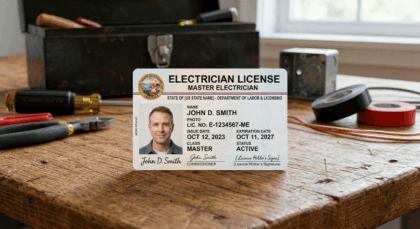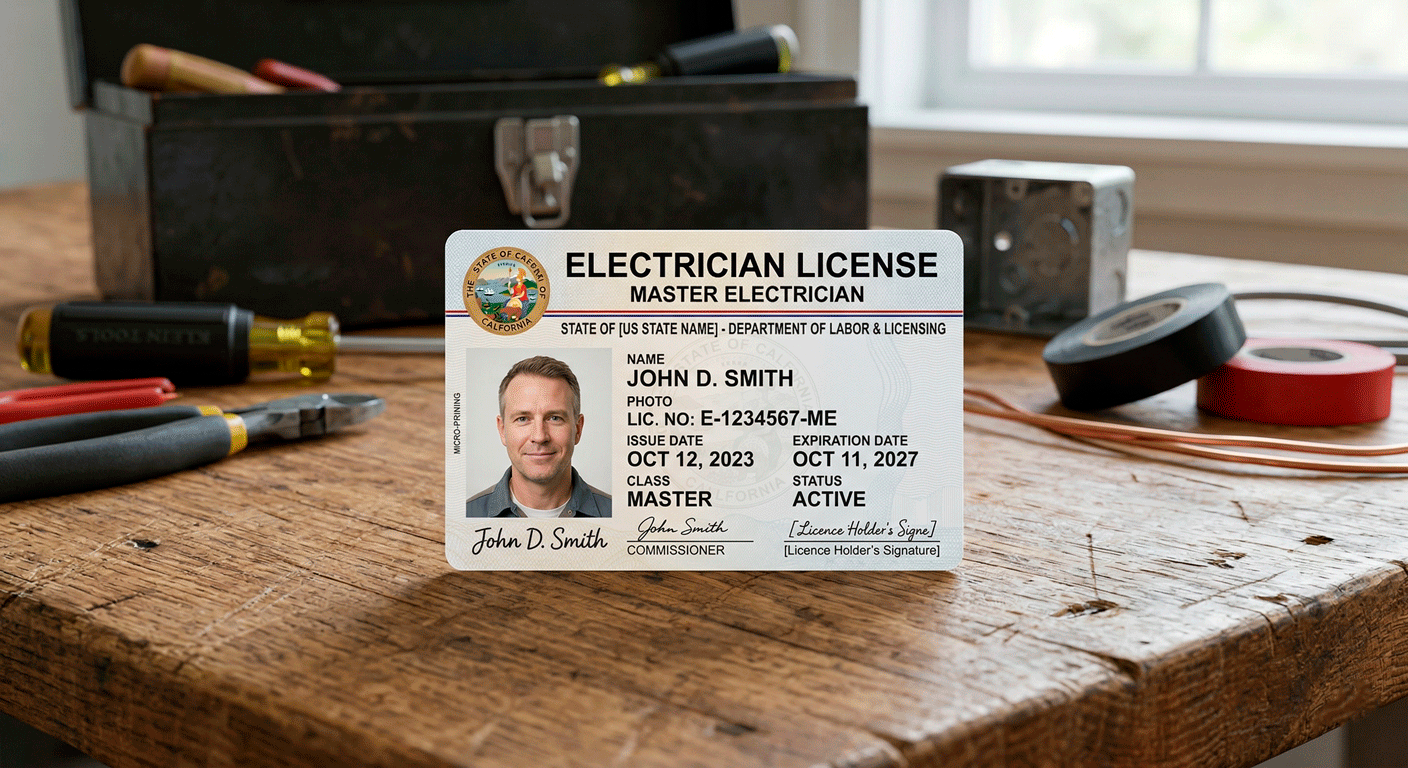
An electrician license is an official state-issued certification that confirms an individual is legally qualified to perform electrical work. It verifies that the holder has completed required training, accumulated supervised hands-on experience, and passed standardized examinations covering electrical systems and safety regulations. This credential is essential for anyone working professionally in the electrical field.
Key Features:
- Legal authorization to perform electrical work: Required in most states to carry out installation, repair, and maintenance of electrical systems.
- Proof of technical competence: Demonstrates knowledge of the National Electrical Code (NEC), local regulations, electrical theory, and safety procedures.
- Structured licensing levels: Typically divided into tiers such as Apprentice, Journeyman, and Master Electrician, each reflecting increasing skill and responsibility.
- Safety and compliance assurance: Ensures that electrical work meets established safety standards, reducing risks such as fire hazards and electrical injury.
How a Fake Electrician License Is Misused:
- Unauthorized electrical work: Counterfeit licenses may be used to perform electrical services without proper qualification.
- Fraudulent employment claims: Fake credentials can be presented to obtain jobs on construction sites or with contractors.
- Bypassing safety regulations: May be used to avoid inspections, licensing requirements, or code compliance checks.
- Endangering public safety: Unqualified individuals posing as licensed electricians can perform unsafe installations or repairs.