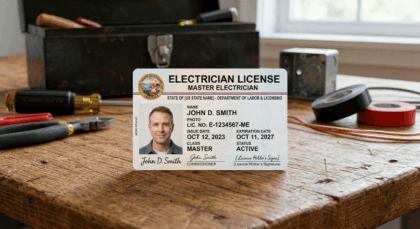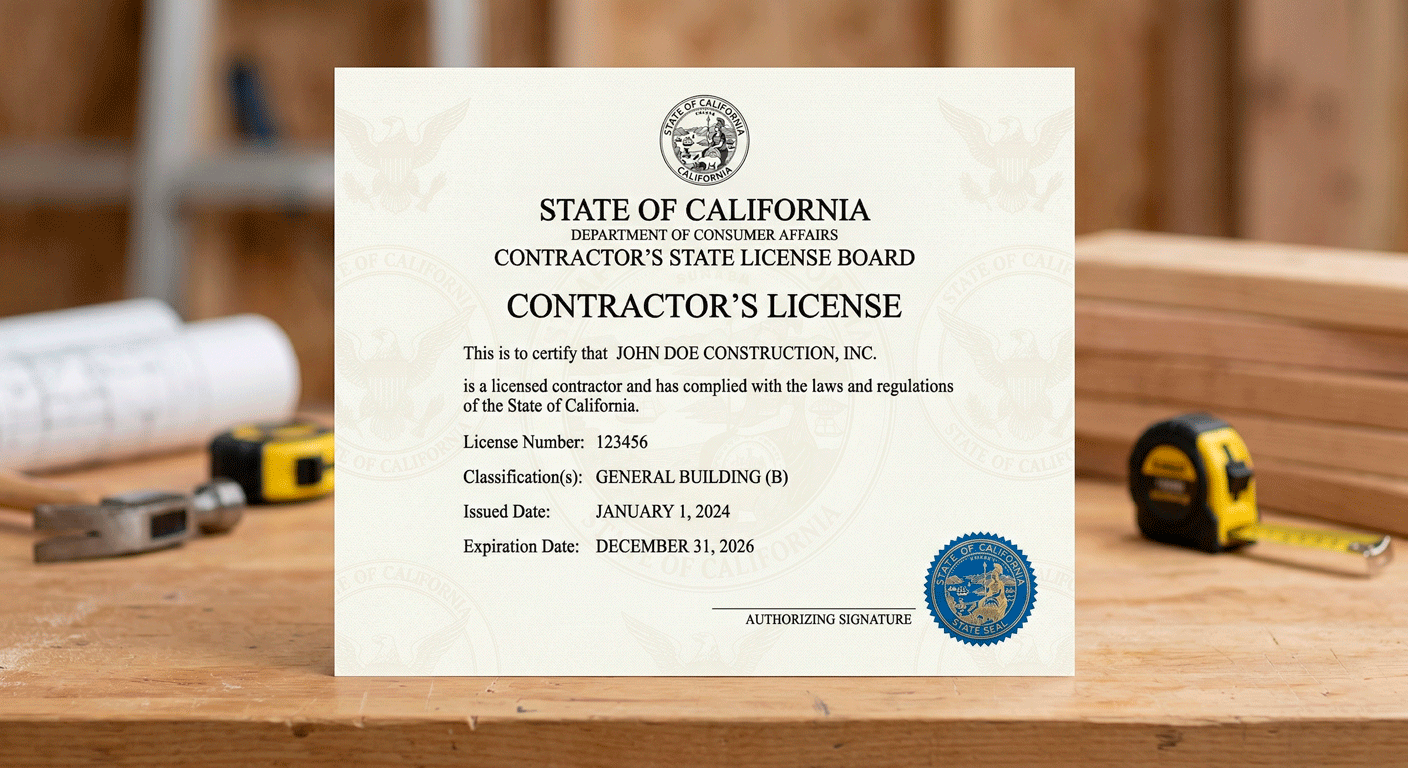
A contractor license is an official state-issued certification that confirms an individual or company is legally qualified to carry out and manage construction projects. It verifies that the holder meets required standards in technical skill, regulatory knowledge, and professional responsibility, ensuring compliance with building laws and safety regulations.
Key Features:
- Legal authorization for construction work: Required in most states to legally perform or oversee building projects above certain thresholds, especially in specialized trades such as electrical, plumbing, or HVAC.
- Proof of professional competence: Confirms successful completion of exams, verified field experience, and understanding of building codes, safety standards, and construction-related laws.
- Consumer protection framework: Ensures contractors are properly licensed, bonded, and insured, giving clients legal protections and recourse in case of disputes or substandard work.
- Defined scope of services: Specifies the type of construction activities the contractor is permitted to perform, such as general contracting, residential building, or specialty trade work.
How a Fake Contractor License Is Misused:
- Illegal contracting work: Counterfeit licenses may be used to take on construction jobs without proper qualifications or authorization.
- Fraudulent bidding on projects: Fake credentials can be used to win contracts or secure bids for construction work.
- Bypassing regulatory oversight: May be used to avoid inspections, permits, or compliance with building codes.
- Client deception and financial harm: Unlicensed individuals may mislead homeowners or businesses and deliver unsafe or substandard construction work.