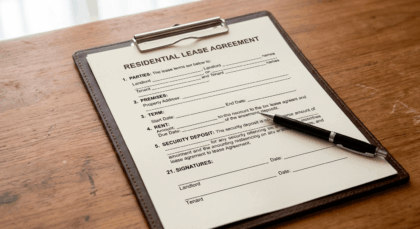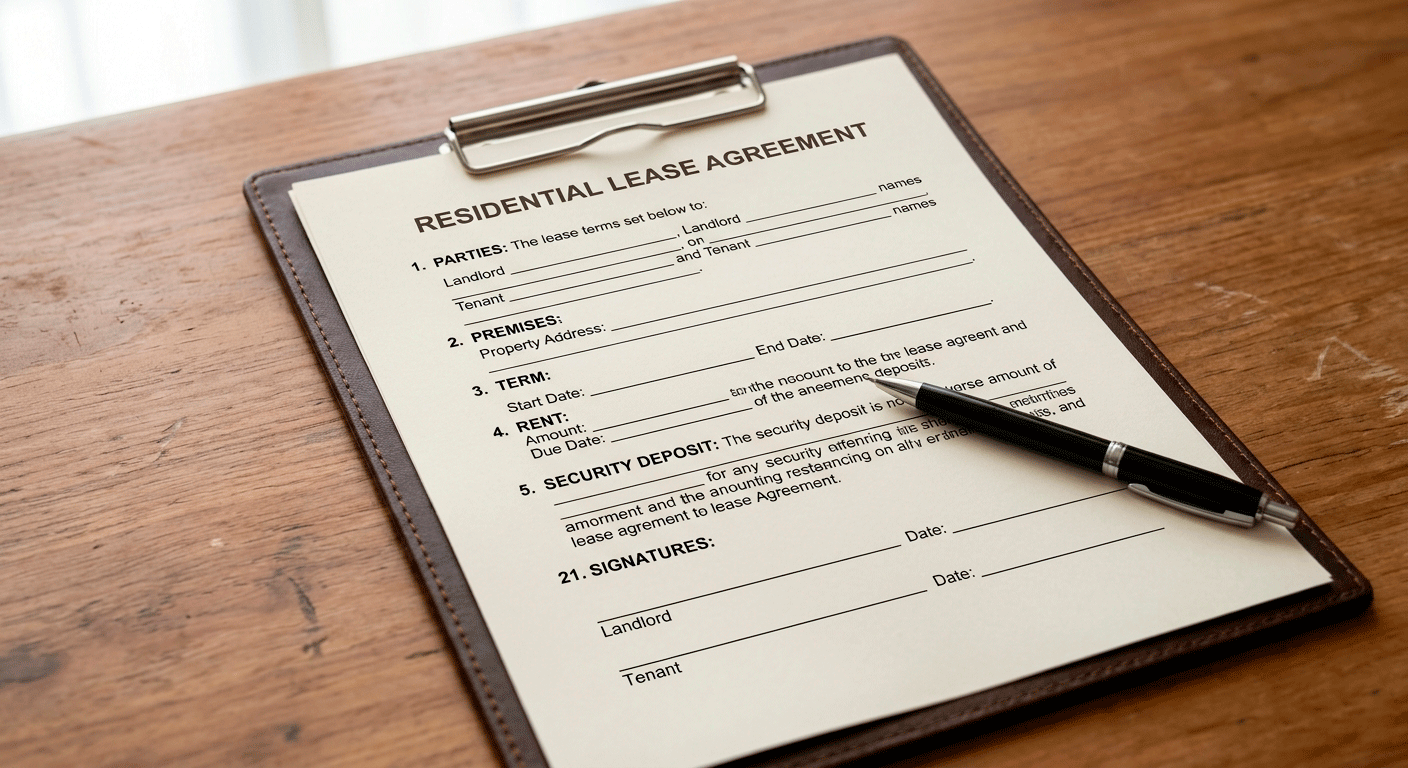
A lease agreement is a legally binding contract that sets out the terms under which a landlord allows a tenant to occupy residential or commercial property in exchange for rent. It defines the rights, responsibilities, and expectations of both parties for the duration of the tenancy.
Key Features:
- Right to occupy property: Grants the tenant lawful, exclusive use of the premises for a specified period, limiting unauthorized access by the landlord except as permitted by law.
- Fixed rental terms: Specifies rent amount, payment schedule, accepted methods, and penalties for late or missed payments.
- Defined lease duration: Establishes the length of the tenancy (such as 6 or 12 months, or month-to-month) along with renewal and termination conditions.
- Mutual obligations: Outlines responsibilities for both tenant and landlord, including maintenance duties, property care rules, and repair expectations.
How a Fake Lease Agreement Is Misused:
- False proof of residence: Forged leases may be used to claim residency at an address without permission.
- Fraudulent rental applications: Fake documents can be submitted to secure housing or sublet properties illegally.
- Access to services or benefits: May be used to obtain utilities, government services, or local benefits tied to residency.
- Deception of landlords or institutions: Sometimes used to mislead property owners, banks, or agencies during verification processes.