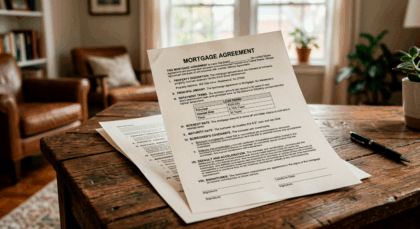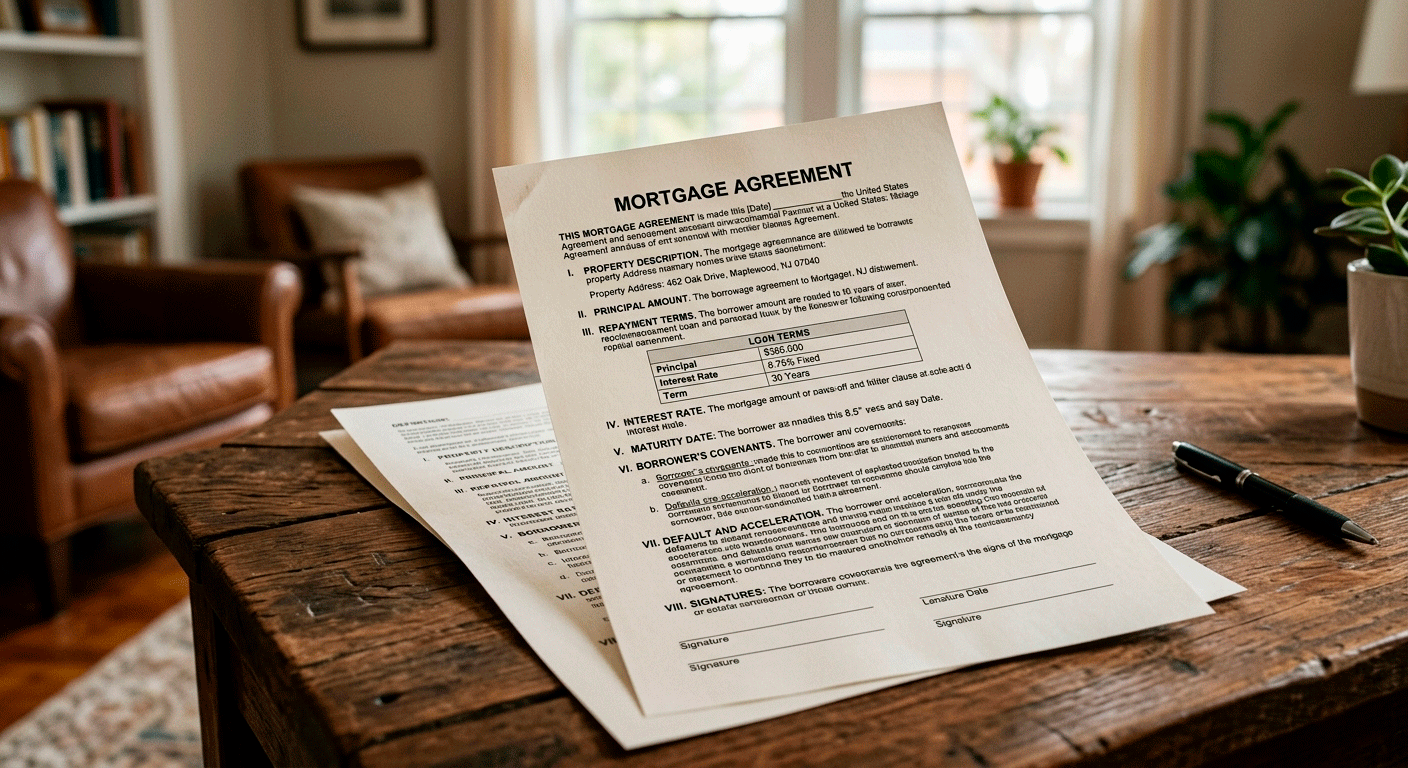
A mortgage agreement is a legally binding financial contract that governs a loan used to purchase real estate. It sets out the terms under which a borrower receives funds from a lender and uses the property itself as collateral until the debt is fully repaid. This agreement formally establishes a security interest (lien) in favor of the lender.
Key Features:
- Secured financing arrangement: Links the loan directly to the property, making the real estate collateral for repayment over a long-term schedule.
- Detailed repayment structure: Defines loan amount, interest rate (fixed or variable), repayment duration (commonly 15–30 years), and monthly payment obligations.
- Borrower responsibilities: Requires the borrower to maintain insurance, pay property taxes, and keep the property in acceptable condition throughout the loan term.
- Lender enforcement rights: Grants the lender legal authority to initiate foreclosure proceedings if the borrower fails to meet repayment obligations.
How a Fake Mortgage Agreement Is Misused:
- False proof of property financing: Forged documents may be used to claim a property is financed or owned under legitimate terms.
- Fraudulent loan applications: Fake agreements can be submitted to lenders or institutions to obtain additional credit or financial approval.
- Property and asset deception: May be used to misrepresent ownership status during sales, rentals, or investment transactions.
- Financial manipulation schemes: Sometimes used to mislead third parties about debt obligations or property value.