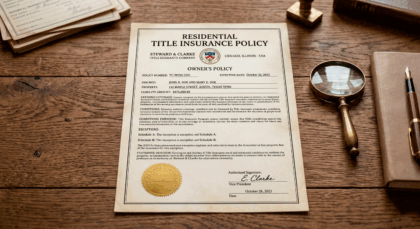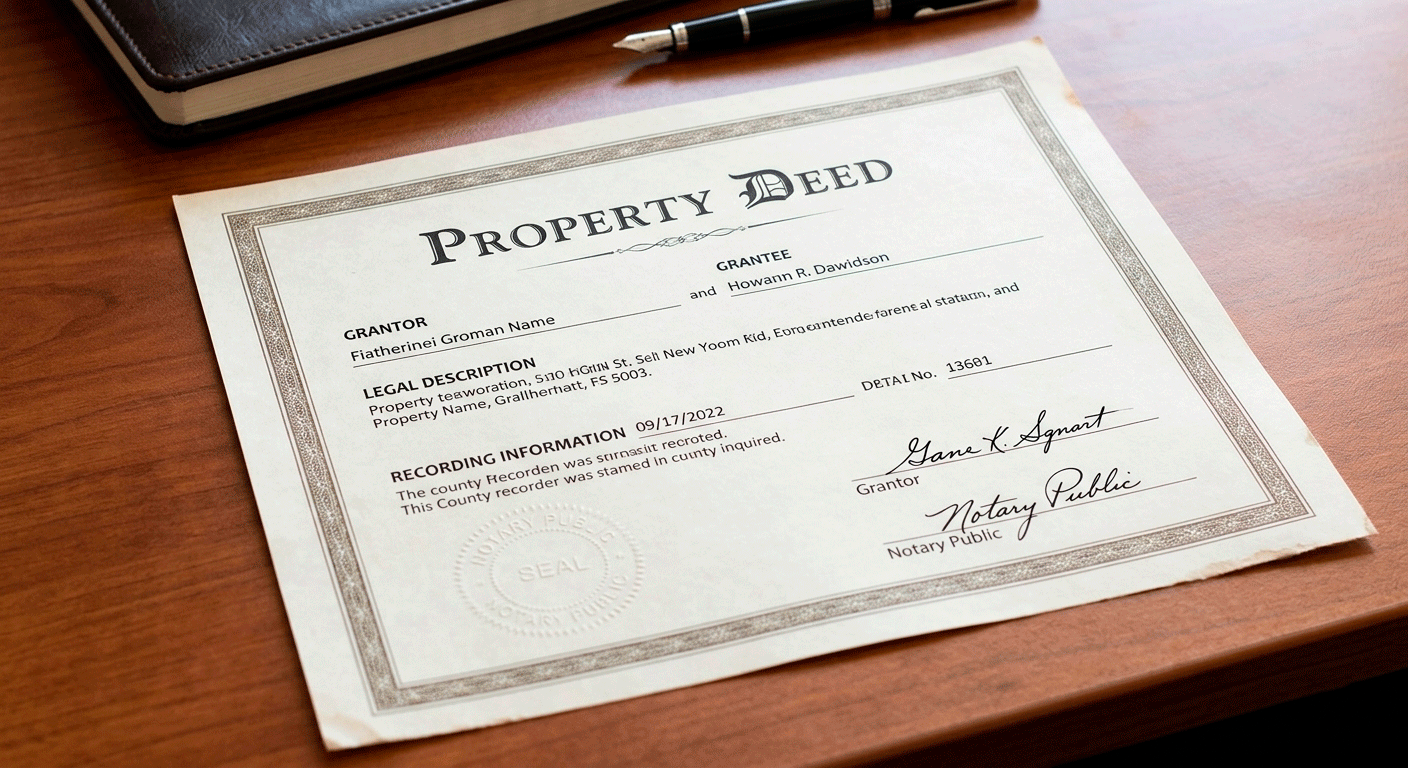
A property deed is a formal legal document that establishes and transfers ownership rights to real estate. It is executed through a signed and delivered instrument that legally moves title from one party (the grantor) to another (the grantee), and it serves as the primary record of ownership for land or property.
Key Features:
- Proof of legal ownership: Acts as the official evidence that an individual or entity holds rightful title to a specific piece of real estate.
- Legally binding transfer: Documents the conveyance of ownership rights and is typically filed and recorded with a county or local government office.
- Precise property description: Contains an exact legal description of the land boundaries, which goes beyond a simple street address.
- Type of ownership defined: Specifies the form of transfer, such as warranty deeds (full legal protection) or quitclaim deeds (limited or no guarantees).
How a Fake Property Deed Is Misused:
- Illegal property takeover: Forged deeds may be used to falsely claim ownership of real estate.
- Fraudulent sales or transfers: Fake documents can be used to sell or transfer property without the real owner’s consent.
- Financial fraud involving property: May be used to secure loans or leverage property assets that are not legally owned.
- Record manipulation: Sometimes used to alter or corrupt official land registry records for personal gain.