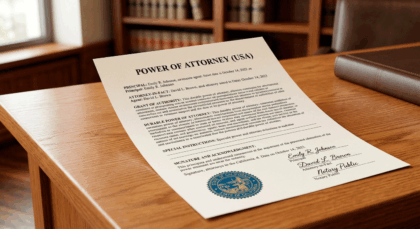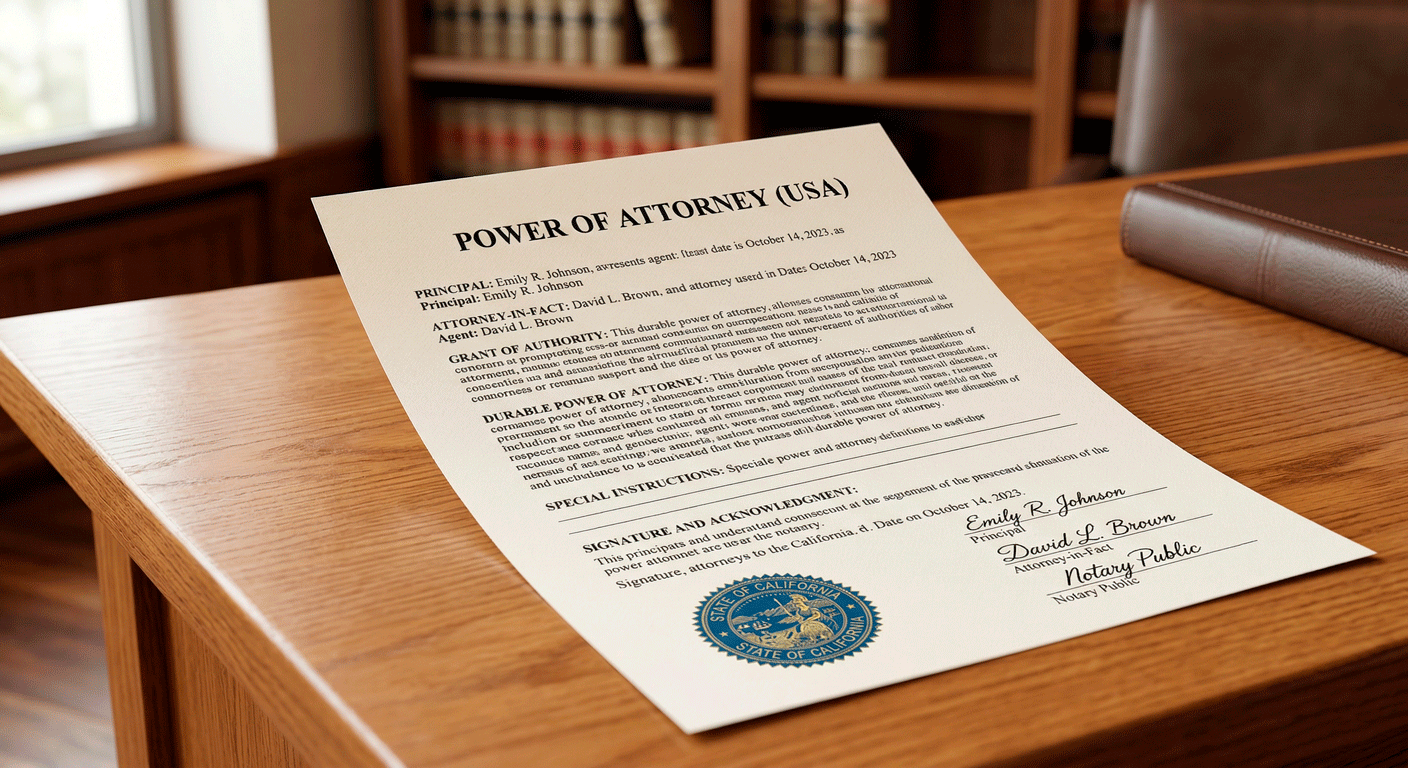
A Power of Attorney (POA) is a formal legal instrument that allows one person to grant another individual the authority to act on their behalf. The person creating the document (the principal) assigns decision-making powers to a trusted representative (the agent or attorney-in-fact) for financial, legal, or medical matters, depending on the scope of the authorization.
Key Features:
- Delegation of authority: Transfers specific or broad decision-making powers to another person to handle designated responsibilities.
- Different legal forms: Can be structured as a general POA (wide authority), limited/special POA (specific task), or durable POA (remains valid even if the principal becomes incapacitated).
- Financial and healthcare powers: May cover banking, property, and tax matters or extend to medical decisions, treatment choices, and care planning through separate legal forms.
- Incapacity protection: A durable POA ensures continuity of decision-making without court intervention if the principal becomes unable to manage their affairs.
How a Fake Power of Attorney Is Misused:
- Unauthorized control over assets: Forged POA documents may be used to access bank accounts or manage property without legal permission.
- Financial exploitation: Fake authority can be used to transfer funds, sign contracts, or conduct transactions in someone else’s name.
- Medical decision manipulation: May be used to falsely claim authority over healthcare choices for another individual.
- Legal deception: Sometimes presented to institutions to bypass verification and gain control over personal or financial matters.