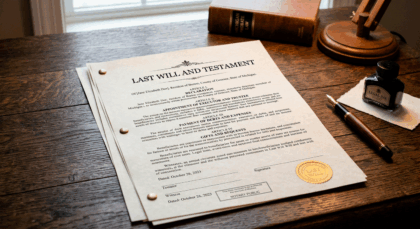
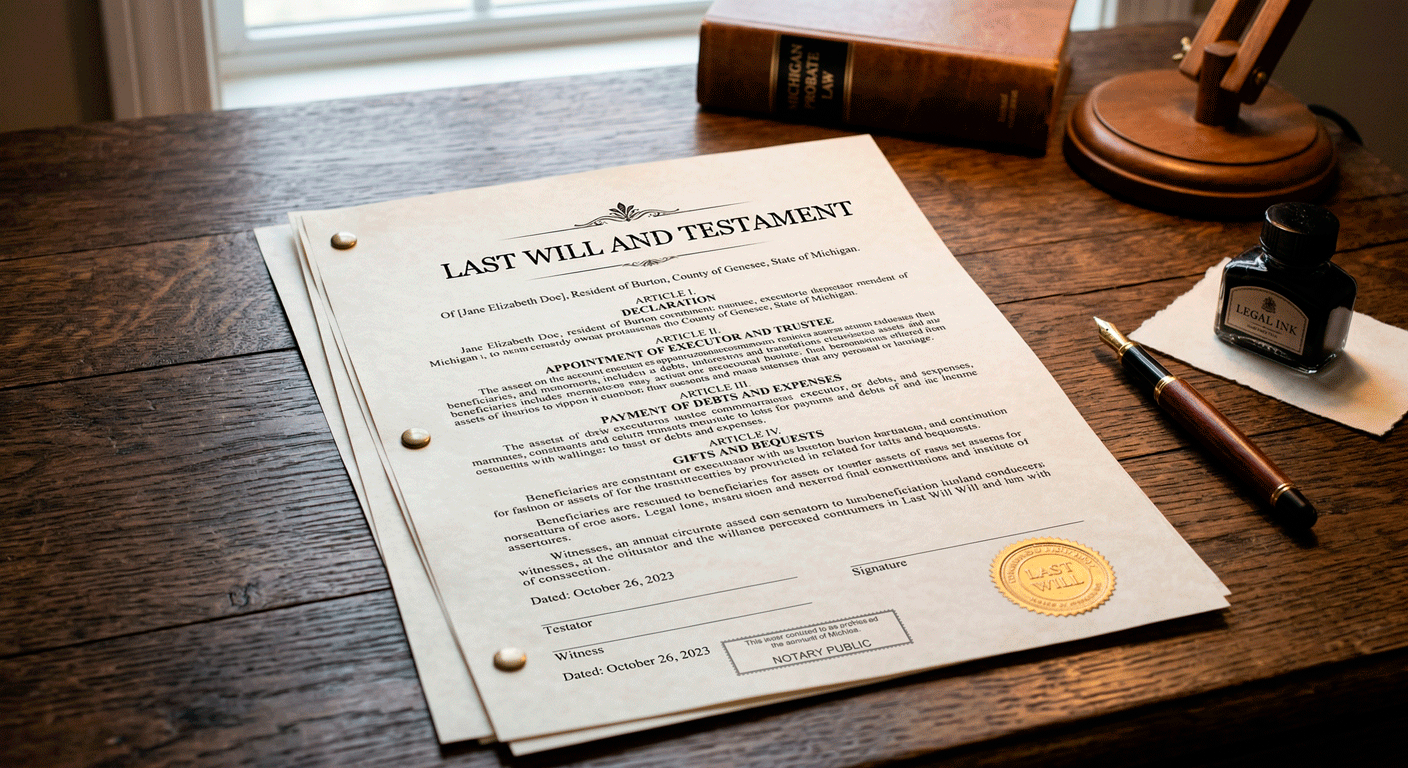
A Last Will and Testament is a legally binding document that sets out how a person’s assets and responsibilities should be handled after their death. It allows an individual to clearly define how property is distributed and ensures that personal wishes are formally recorded and followed through the legal estate process.
Key Features:
- Distribution of assets: Specifies how belongings such as real estate, financial accounts, investments, and personal possessions are to be allocated among chosen beneficiaries.
- Appointment of guardians: Allows the testator to designate a legal guardian for minor children in the event of their passing.
- Executor designation: Names a responsible individual to manage the estate, carry out instructions in the will, and oversee probate proceedings.
- Final instructions: May include personal wishes regarding funeral arrangements and can establish trusts to manage assets for minors or beneficiaries needing financial oversight.
How a Fake Will Is Misused:
- Fraudulent inheritance claims: Forged wills may be used to unlawfully claim property or assets from an estate.
- Manipulation of estate distribution: Fake documents can be introduced to alter the intended beneficiaries of a deceased person’s assets.
- Legal disputes and probate fraud: May be used to mislead courts during estate administration or probate proceedings.
- Financial exploitation of heirs: Sometimes used to deprive rightful heirs of their inheritance through falsified instructions.