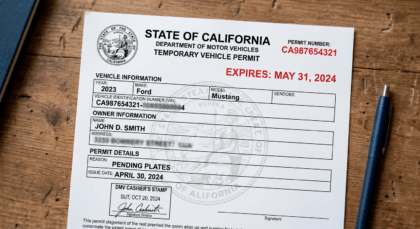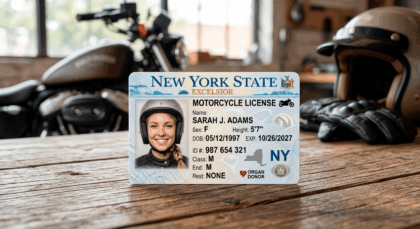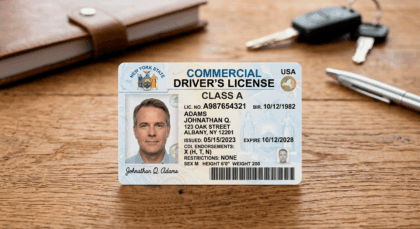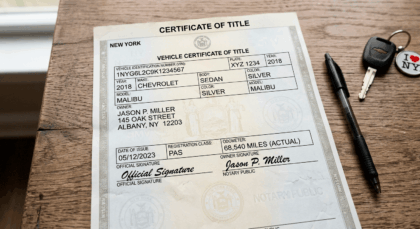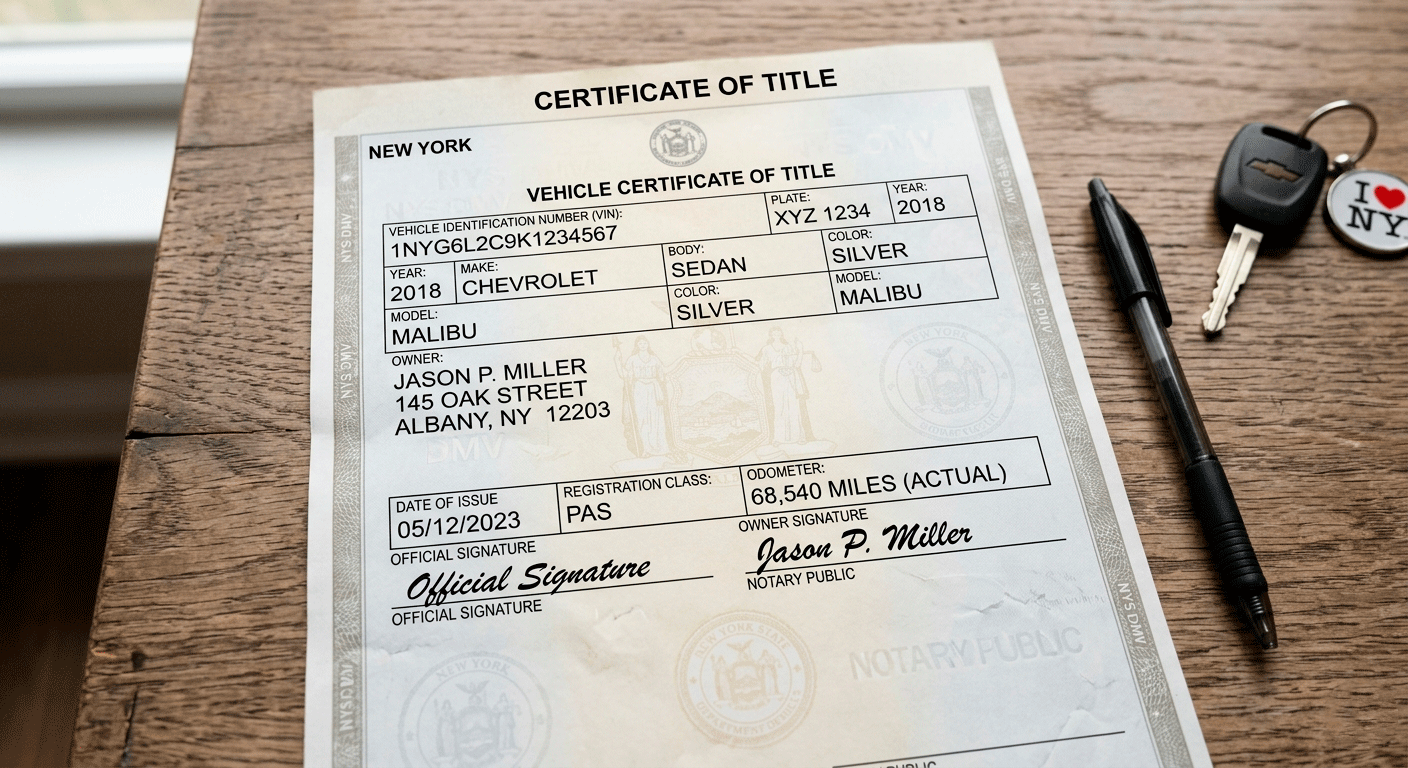
A vehicle registration certificate is an official state-issued record that confirms a vehicle has been properly documented for lawful use on public roads. It connects a specific car, truck, or motorcycle to its registered owner and verifies compliance with state requirements such as insurance, inspections, and applicable fees.
Key Features:
- Proof of lawful operation: Confirms that the vehicle is authorized for use on public roads under state law.
- Periodic renewal system: Must be updated regularly (often annually or every two years) to keep vehicle records current and valid.
- Owner–vehicle linkage: Includes identifying details of the registered owner, creating an official connection between person and vehicle in state databases.
- Expiration tracking: Works alongside license plates and validation stickers that display registration status and expiration dates for quick verification.
How a Fake Registration Document Is Misused:
- Illegal road use: Counterfeit registration papers may be used to operate unregistered vehicles as if they were legally approved.
- Avoiding compliance checks: Can be used to bypass requirements such as insurance verification, emissions testing, or renewal payments.
- Concealing ownership status: Sometimes used to obscure the true legal status of a vehicle, including cases involving stolen or improperly titled cars.
- Evading enforcement systems: May interfere with police and DMV verification processes during stops or inspections.