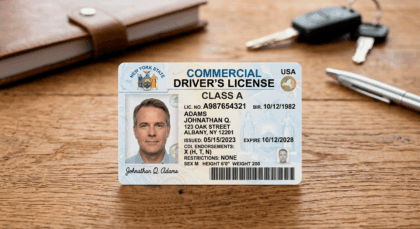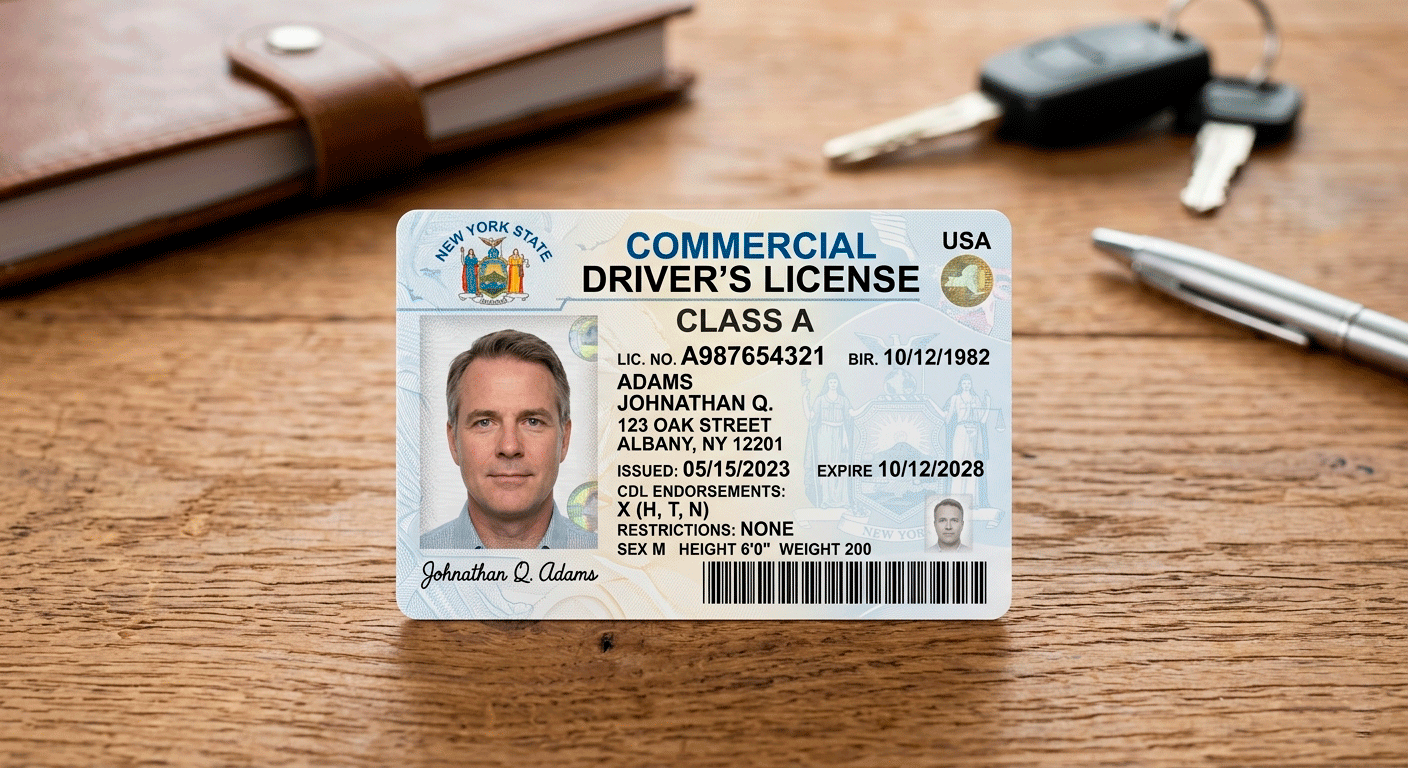
A Commercial Driver’s License (CDL) is an official, government-issued credential that certifies an individual’s qualification to operate large, heavy, or specialized commercial vehicles. It is required for professional driving roles involving transportation of goods or passengers and reflects advanced training, testing, and safety standards beyond a regular driver’s license.
Key Features:
- Professional driving authorization: Legally permits the operation of Commercial Motor Vehicles (CMVs), enabling employment in trucking, passenger transport, and logistics industries.
- License classification system: Divided into Class A, B, and C categories, each defining the type and size of vehicles a driver is qualified to operate based on weight and usage.
- Specialized endorsements: Additional certifications may be required for specific operations, such as hazardous materials (HazMat), passenger transport (P), or multiple trailers (T).
- Strict qualification standards: Requires comprehensive written and practical exams, medical fitness evaluation (DOT physical), and background screening.
How a Fake Commercial Driver’s License Is Misused:
- Unauthorized commercial driving: Counterfeit CDLs may be used to operate trucks, buses, or heavy vehicles without proper qualification.
- Fraudulent employment in transportation: Fake credentials can be presented to obtain jobs in logistics, freight, or passenger transport industries.
- Bypassing safety regulations: May be used to avoid mandatory testing, medical checks, or licensing requirements.
- Endangering public safety: Unqualified individuals operating commercial vehicles can create serious risks on roads and highways.