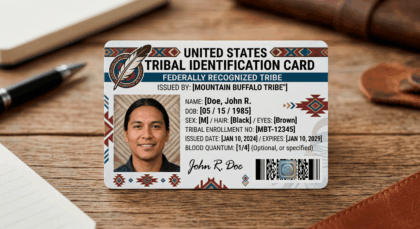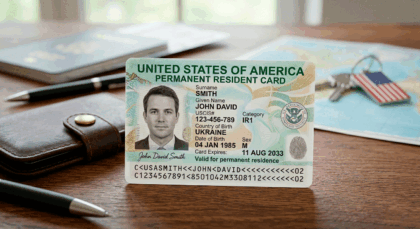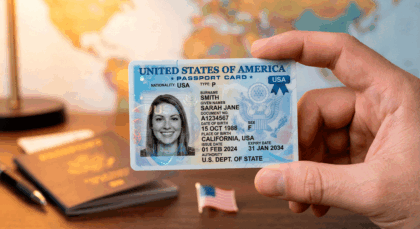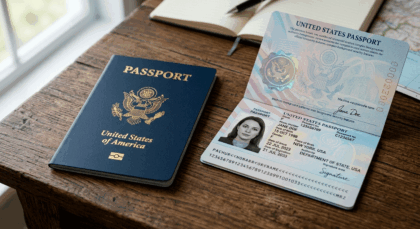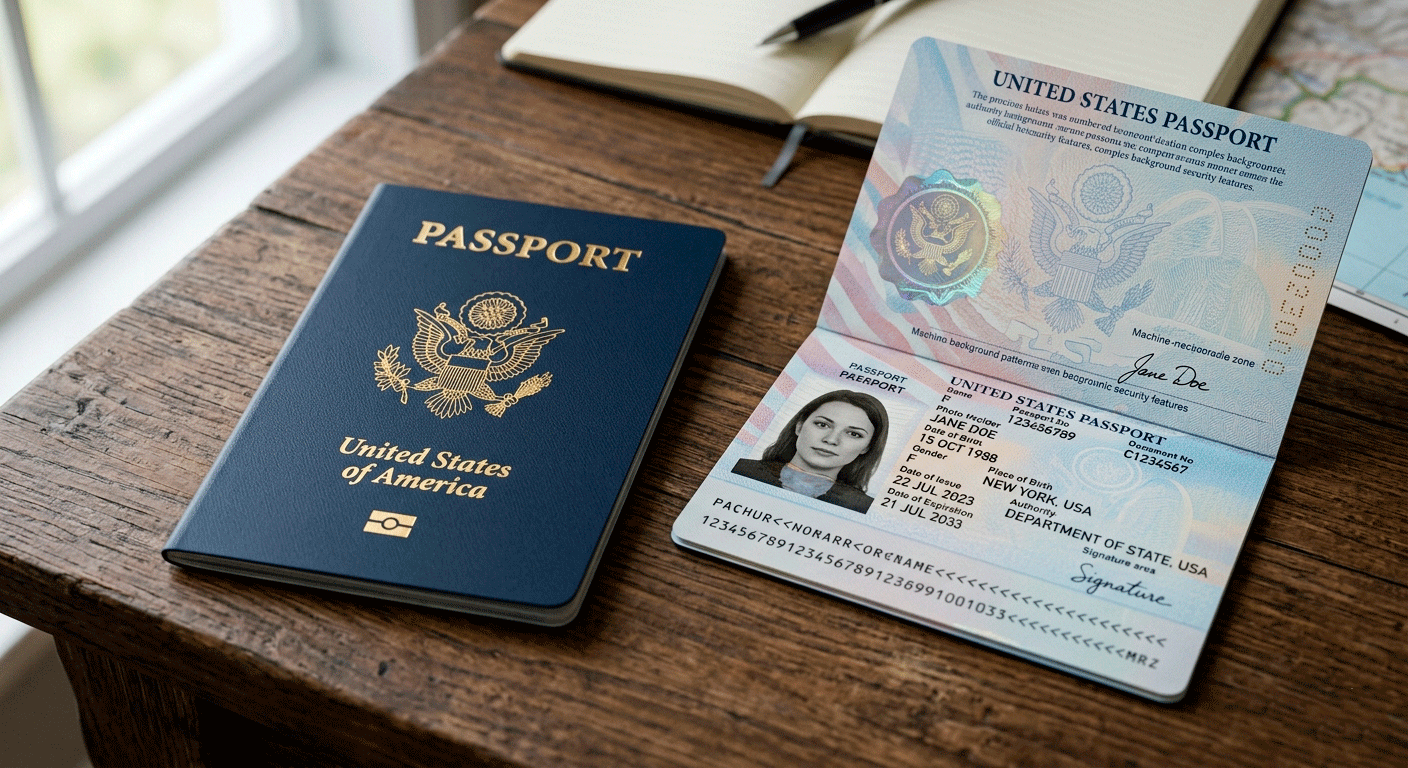
The United States passport is an official government-issued document that verifies both identity and citizenship. It serves as a primary credential for international travel, legal entry into foreign countries, and access to assistance from U.S. consular services abroad. More than just a travel document, it functions as a globally recognized form of identification.
Key Features:
- Worldwide acceptance: Enables visa-free or visa-on-arrival access to a large number of countries and territories, making international travel significantly easier.
- Enhanced security technology: Includes multiple anti-counterfeiting measures such as biometric chips, watermarks, specialized paper, and holographic elements.
- Biometric verification: Contains digital facial data and fingerprints, allowing for faster and more secure border processing through automated systems.
- Long validity period: Typically issued for 10 years for adults and 5 years for minors under 16, designed for long-term international use.
- Consular protection: Provides official proof of citizenship, granting access to assistance and protection from U.S. embassies and consulates worldwide.
How a Fake Passport Is Misused:
- Illegal identity creation: Counterfeit passports may be used to assume a false identity in travel or financial activities.
- Unauthorized border crossing: Fake documents can be used in attempts to enter countries illegally or bypass immigration controls.
- Financial and account fraud: Fraudulent passports may be used to open bank accounts or pass identity verification checks.
- Concealing true nationality: Sometimes used to hide real citizenship or personal background for illicit purposes.