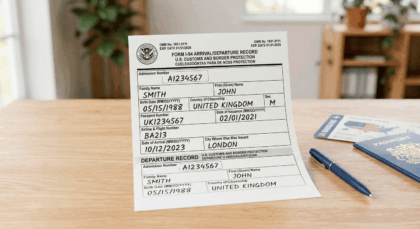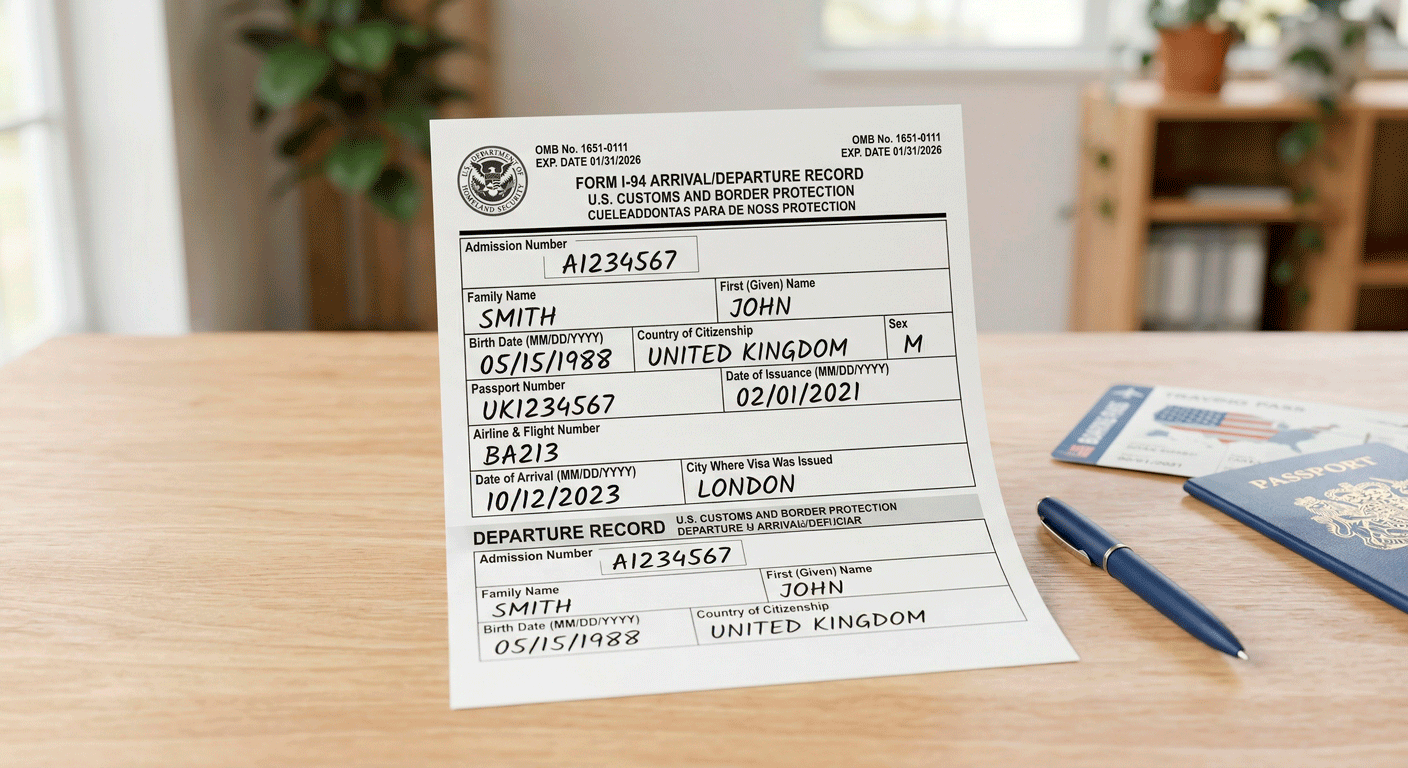
The Form I-94 is an official U.S. Customs and Border Protection (CBP) electronic record that documents a non-immigrant’s lawful entry into the United States and specifies the terms of their authorized stay. Unlike a visa or physical card, it exists primarily as a digital entry record created automatically upon arrival.
Key Features:
- Legal status definition: Shows the traveler’s immigration classification (such as B-2 visitor, F-1 student, or H-1B worker) along with the permitted duration of stay in the U.S.
- Digital record system: Stored electronically through the CBP database and accessible online, with printable copies often used for verification purposes.
- Proof of lawful admission: Serves as official evidence of legal entry and authorized presence, commonly required by employers, schools, and government agencies.
- Stay tracking mechanism: Clearly indicates the expiration of authorized stay, helping prevent overstays and related immigration violations.
How a Fake Form I-94 Is Misused:
- False lawful status claims: Forged records may be used to pretend legal entry or valid immigration status.
- Employment fraud: Fake documents can be presented to employers during onboarding to bypass work authorization checks.
- Access to services: May be used to obtain government services, licenses, or enrollment in institutions without legal eligibility.
- Immigration deception: Sometimes used to mislead authorities during status adjustments, extensions, or legal proceedings.