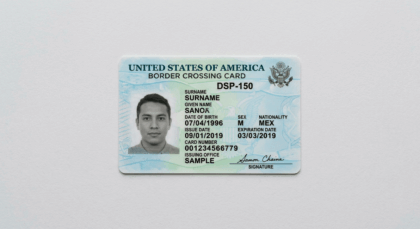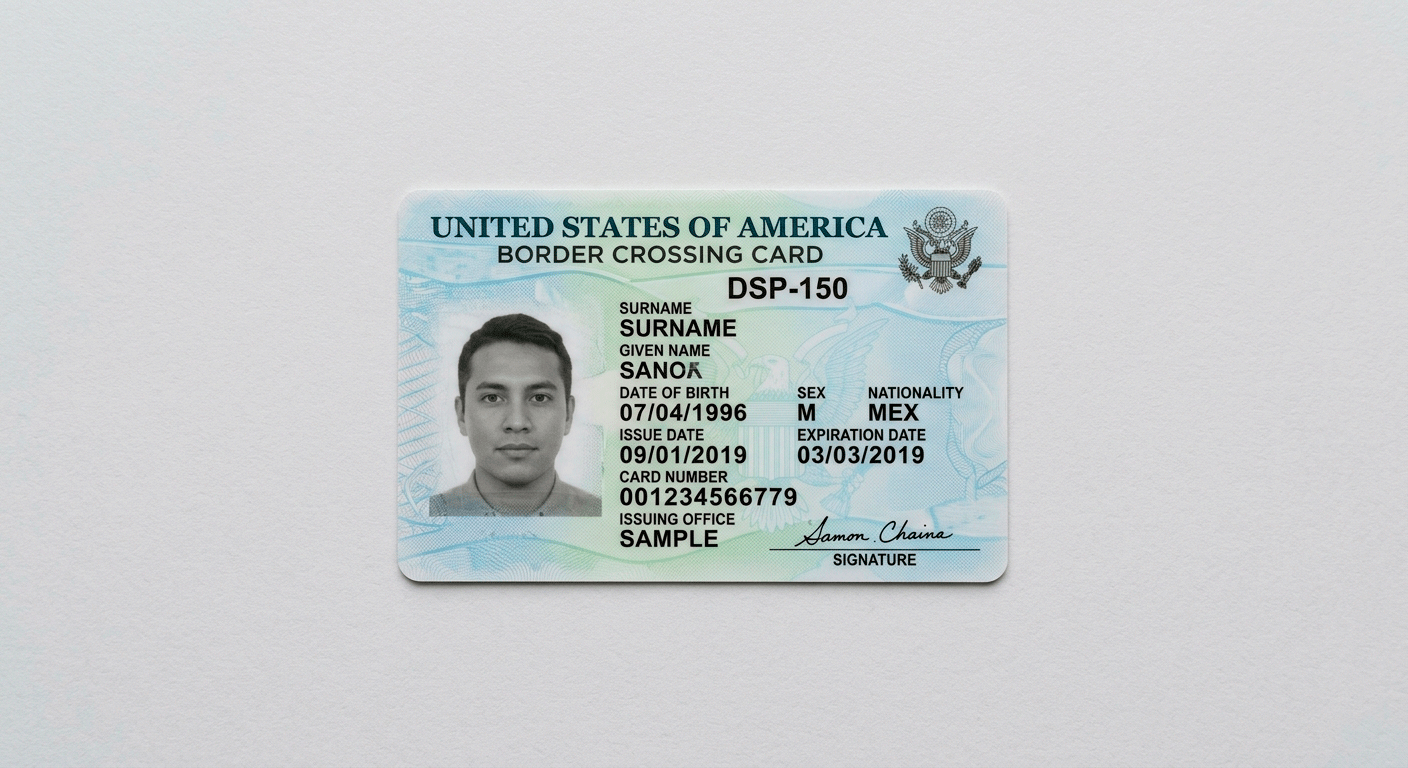
The Border Crossing Card (often referred to as a “laser visa”) is an official U.S. immigration document designed specifically for eligible citizens of Mexico. It combines the functions of a visitor visa and an identification card, allowing for regulated short-term entry into the United States, primarily through land and sea ports of entry.
Key Features:
- Combined visa and ID function: Works as both a B-1/B-2 visitor visa for temporary business or tourism and as a compact identification card for border entry.
- Practical design: Credit-card-sized and made from durable polycarbonate material, making it suitable for frequent cross-border use without carrying a full passport.
- Biometric security elements: Includes embedded chip technology and machine-readable data for faster and more secure processing at ports of entry.
- Extended validity period: Typically issued for up to 10 years, offering long-term travel flexibility for eligible holders.
How a Fake Border Crossing Card Is Misused:
- Unauthorized border entry attempts: Counterfeit cards may be used to try to cross the U.S. border without proper authorization.
- Identity and immigration fraud: Fake documents can be used to misrepresent eligibility for entry into the United States.
- Avoiding immigration controls: May be used in attempts to bypass official visa and inspection procedures.
- Misuse in verification systems: Sometimes presented to deceive authorities or systems that require valid travel documentation.