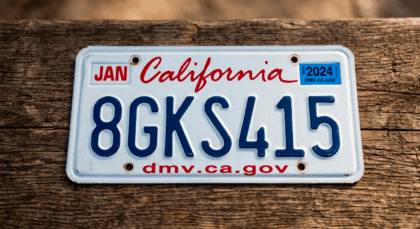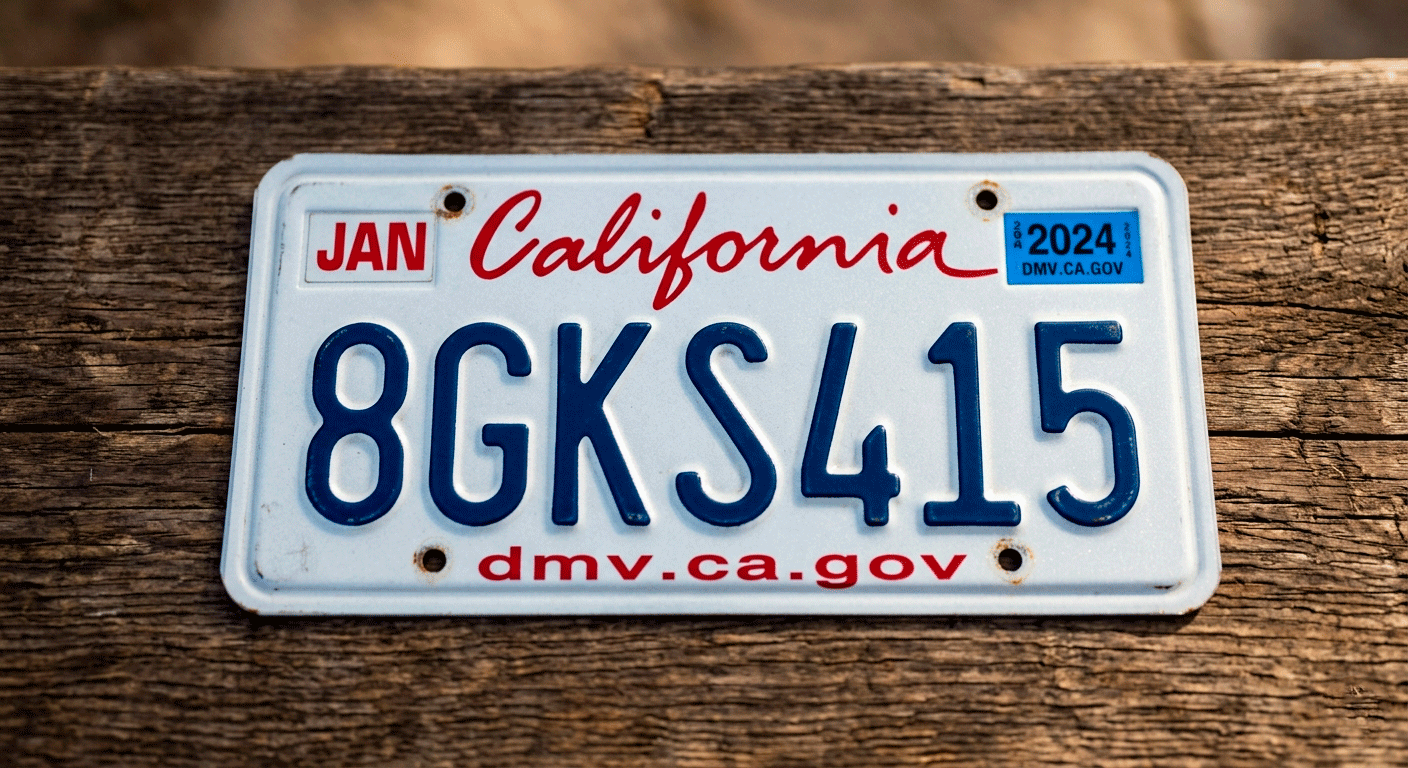
A vehicle license plate is an official state-issued identifier attached to a motor vehicle that confirms its registration for lawful use on public roads. It displays a unique combination of letters and numbers that links the vehicle to its registered owner in government databases.
Key Features:
- Legal requirement for road use: Mandatory for all motor vehicles operating on public streets and highways, ensuring compliance with state transportation laws.
- Unique identification code: Each plate carries a distinct alphanumeric sequence assigned by the DMV, allowing instant identification of the vehicle.
- Proof of registration: Serves as visible confirmation that the vehicle has been properly registered with state authorities.
- Standardized state design: Includes official state symbols, colors, and slogans, with optional specialty or personalized plate designs in many jurisdictions.
How a Fake License Plate Is Misused:
- Vehicle identity concealment: Counterfeit plates may be used to hide a car’s true registration details.
- Avoiding law enforcement tracking: Fake identifiers can help evade toll systems, traffic cameras, or police databases.
- Illegal vehicle operation: May be used to drive unregistered or stolen vehicles on public roads.
- Fraud and impersonation: Sometimes used to match another registered vehicle to mislead authorities or bypass regulations.