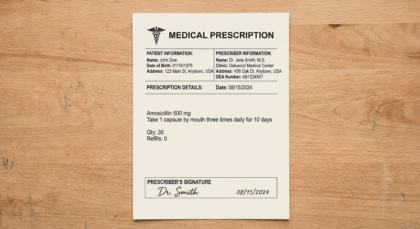
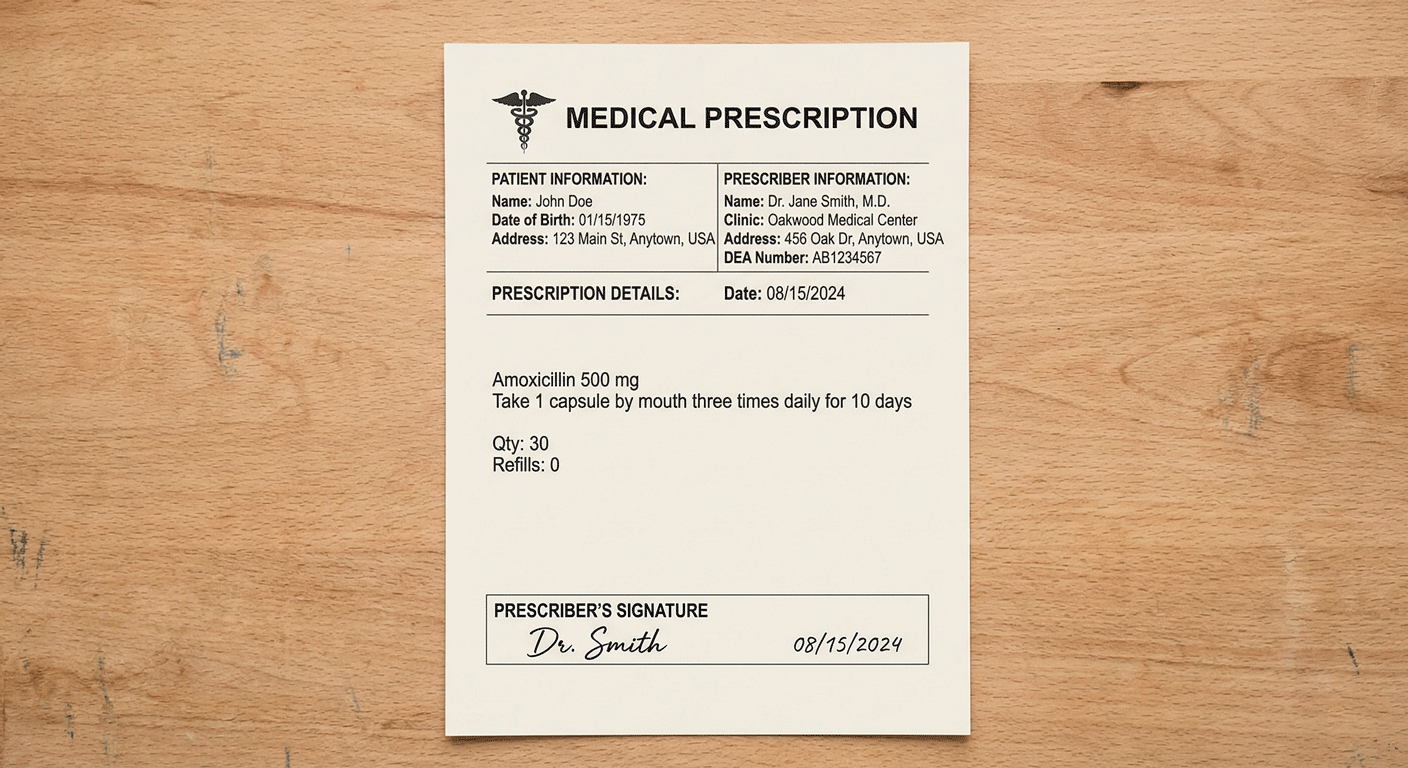
A medical prescription is an official written or electronic authorization issued by a licensed healthcare professional that allows a pharmacy to dispense specific medication to a patient. It serves as a regulated communication tool ensuring that treatment is safe, appropriate, and tailored to the individual’s medical condition.
Key Features:
- Legal dispensing authorization: Provides the only lawful basis for pharmacists to issue prescription medications, including controlled substances that require strict monitoring.
- Detailed treatment instructions: Specifies patient information, medication name, dosage strength, form (tablets, liquid, etc.), and clear usage directions set by the provider.
- Prescriber verification details: Includes the healthcare professional’s name, signature, and contact information for confirmation or clarification if needed.
- Multiple issuing formats: May be provided on paper, transmitted electronically (e-prescription), or communicated directly to a pharmacy by the provider.
How a Fake Prescription Is Misused:
- Illegal access to medications: Forged prescriptions may be used to obtain controlled or restricted drugs without medical authorization.
- Pharmacy deception: Fake documents can be presented to pharmacies to bypass verification processes.
- Substance misuse and diversion: May be used to acquire medications for non-medical or unauthorized purposes.
- Medical record falsification: Sometimes used to falsely indicate treatment or diagnosis that never occurred.