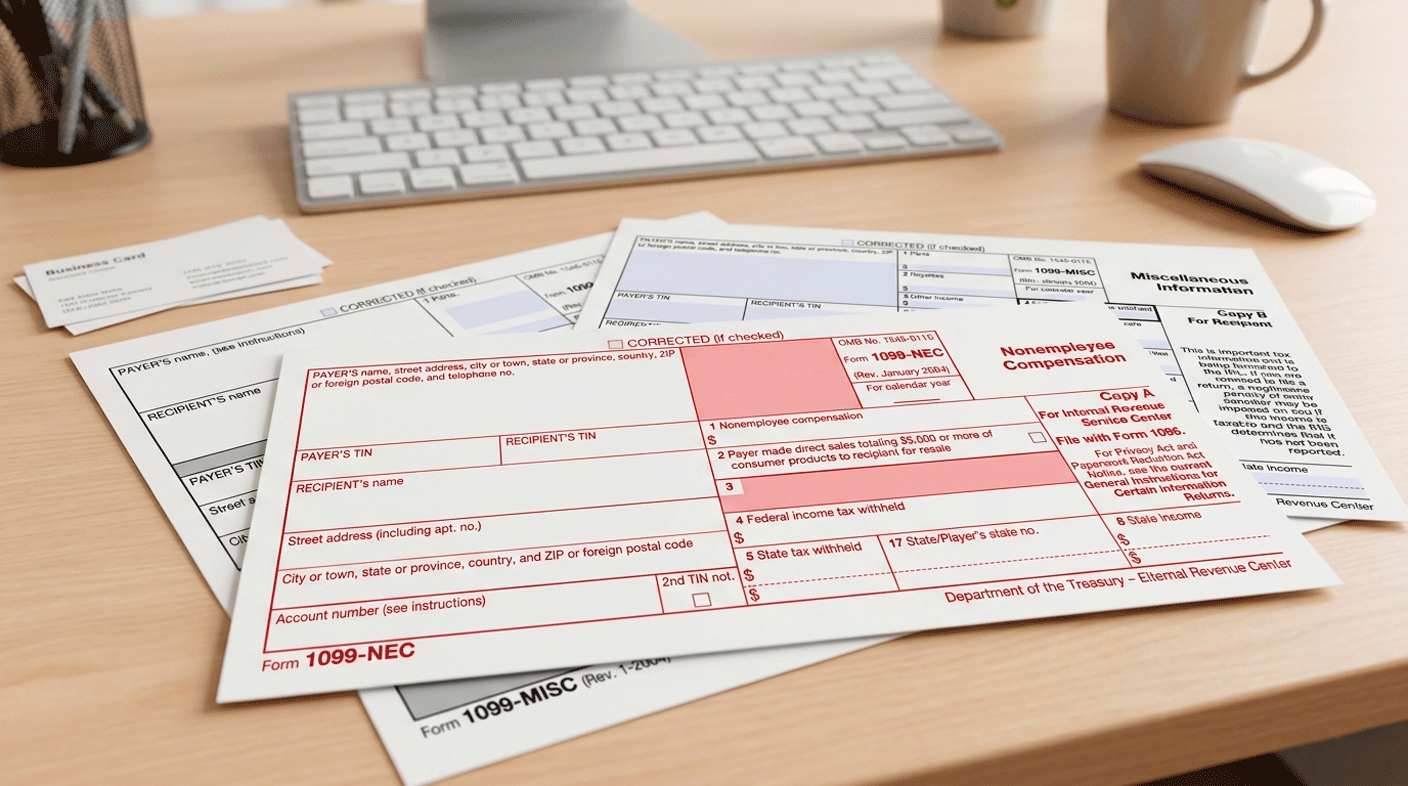
Form 1099 is a key U.S. tax reporting document used to record income earned outside of traditional employment. Unlike a W-2, which applies to employees, the 1099 series is issued by businesses or other payers to individuals such as freelancers, independent contractors, investors, and others who receive non-wage income. Receiving a 1099 generally means the income must be reported to the IRS.
Key Features:
- Non-employee income reporting: Used to document payments made to self-employed individuals, freelancers, and contractors.
- Different form types: Includes several variations depending on income source, such as 1099-NEC (nonemployee compensation), 1099-INT (interest), 1099-DIV (dividends), 1099-MISC (miscellaneous income), and 1099-K (payment processing transactions).
- Reporting thresholds: Typically issued only when payments exceed certain limits, for example $600 or more for 1099-NEC within a tax year.
- Self-employment taxation: Most income reported on 1099 forms is subject to self-employment tax, covering Social Security and Medicare contributions.
How a Fake Form 1099 Is Misused:
- False income creation: Forged 1099 forms may be used to inflate or fabricate earnings.
- Loan and credit fraud: Fake documents can be submitted to lenders to falsely demonstrate income stability.
- Rental application manipulation: Altered forms may be used to appear more financially qualified to landlords.
- Tax-related deception: Fraudulent 1099s can be used to misrepresent income when filing tax returns.