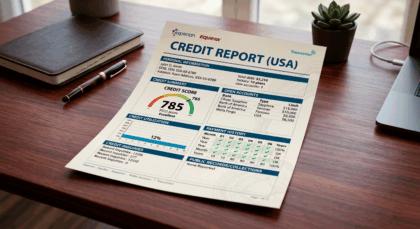
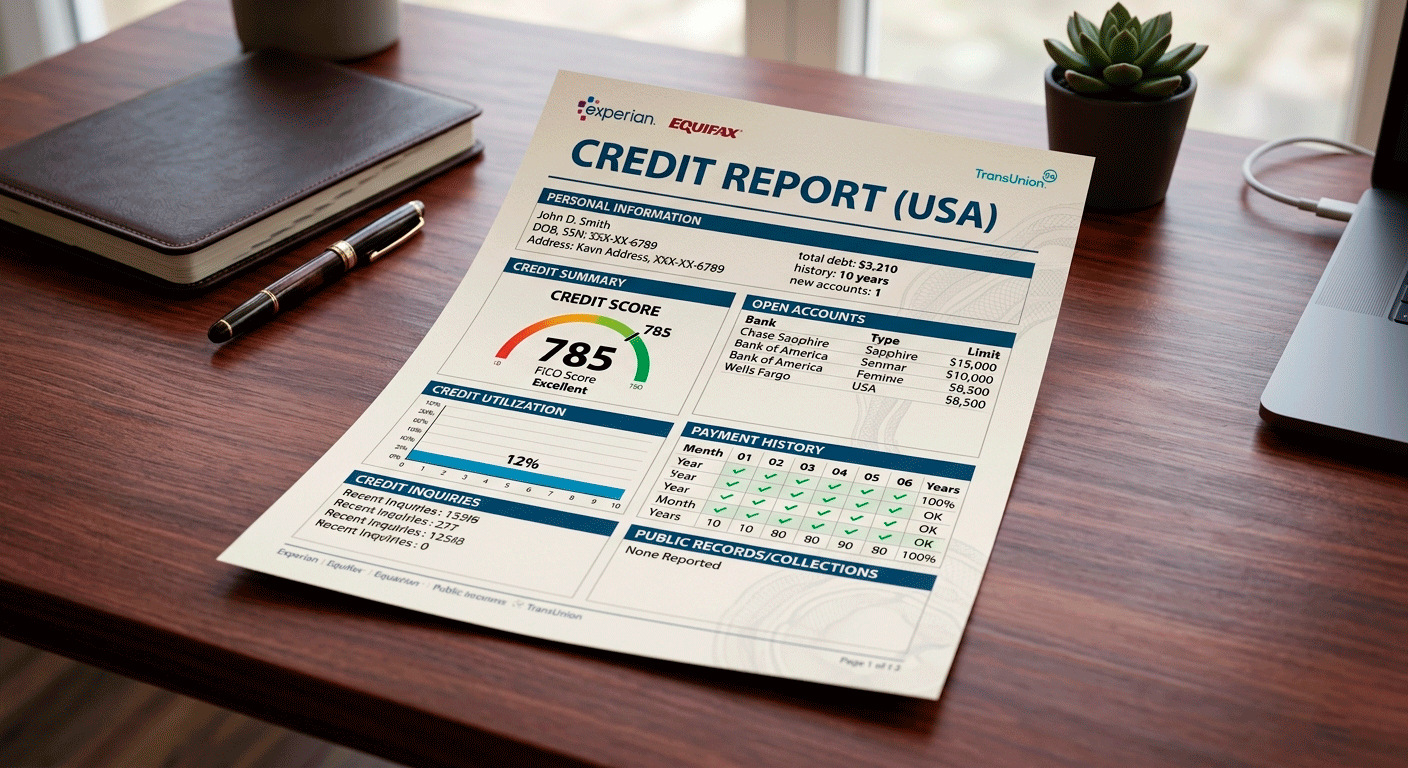
A credit report is a comprehensive financial profile that reflects your history of borrowing and repaying money. It is compiled by the three major credit bureaus—Equifax, Experian, and TransUnion—and is used by lenders, landlords, and insurers to evaluate financial reliability and risk.
Key Features:
- Full credit history overview: Includes all credit accounts such as credit cards, mortgages, auto loans, and student loans, along with balances, credit limits, and payment behavior.
- Public record information: May contain serious financial events like bankruptcies, liens, or court judgments that affect credit standing.
- Credit inquiries: Records every request made to view your credit file, distinguishing between hard inquiries (loan or credit applications) and soft inquiries (background checks or personal reviews).
- Personal identification data: Contains basic identifying details such as name, address history, date of birth, and employment information to match the report to the correct individual.
How a Fake Credit Report Is Misused:
- Loan and credit fraud: Fabricated reports may be used to falsely show strong creditworthiness when applying for loans or credit cards.
- Rental application deception: Fake credit data can be submitted to convince landlords of financial reliability.
- Insurance manipulation: Altered credit profiles may be used to obtain better insurance rates under false pretenses.
- Identity and financial misrepresentation: Fraudulent reports can create a false financial identity or conceal poor credit history.