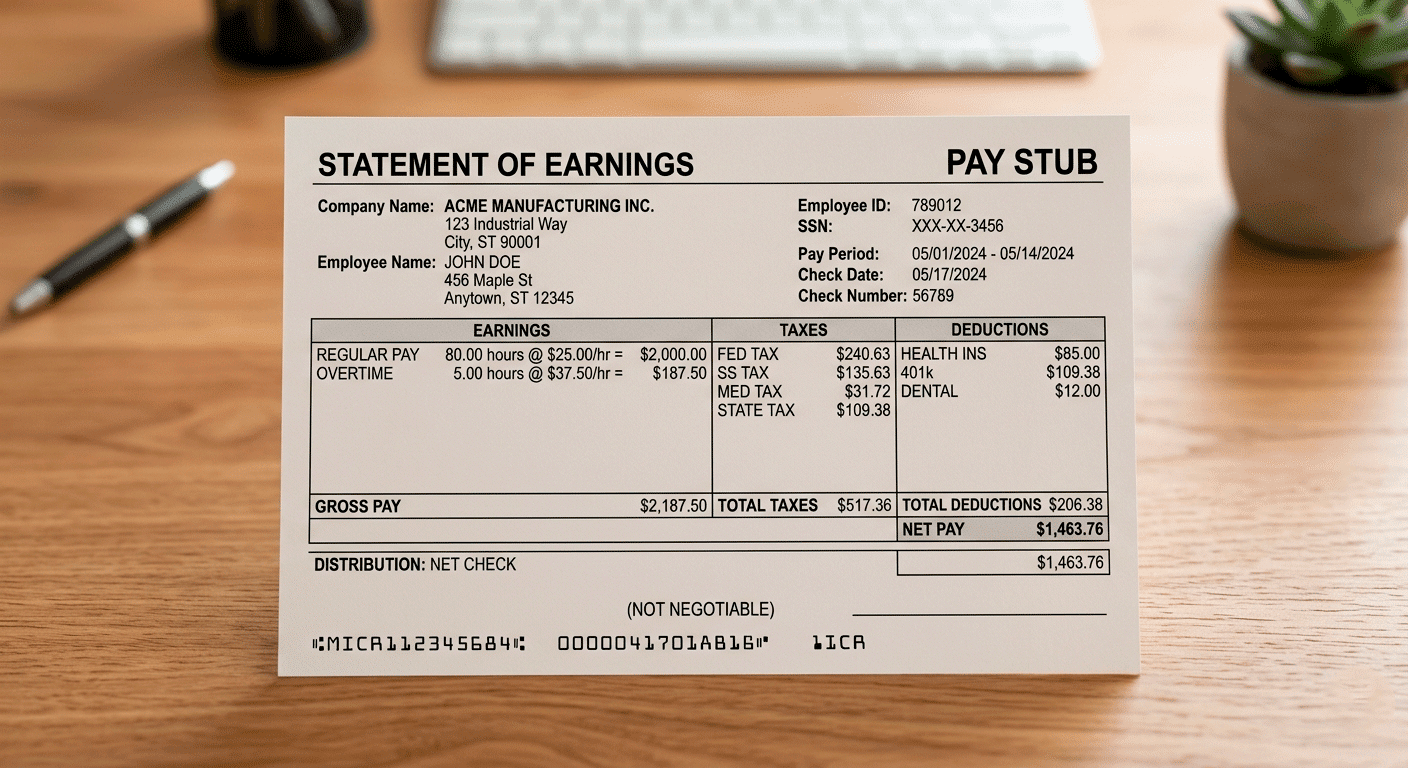
A pay stub is a detailed financial statement issued for each pay period that shows exactly how an employee’s earnings are calculated and how deductions are applied. It is usually provided alongside a paycheck or through an electronic payroll system and serves as a transparent record of compensation.
Key Features:
- Earnings details: Breaks down gross pay, hourly wage or salary, total hours worked, overtime, and any bonuses for the specific pay period.
- Itemized deductions: Shows all withholdings, including federal and state taxes, Social Security, Medicare, insurance premiums, retirement contributions, and other deductions.
- Year-to-date summary: Displays cumulative totals of income and deductions from the beginning of the year, helping track overall earnings and contributions.
- Net pay calculation: Clearly indicates the final take-home amount after all deductions have been applied.
How a Fake Pay Stub Is Misused:
- False income claims: Fraudulent pay stubs may be used to exaggerate earnings when applying for loans, credit cards, or rental housing.
- Financial application fraud: They can be submitted to mislead lenders, landlords, or financial institutions about a person’s ability to pay.
- Employment verification deception: Fake documents may be used to support fabricated job positions or salaries.
- Misrepresentation of financial stability: Altered pay information can be used to create a false impression of steady or higher income.